"My Child Doesn't Speak English"
Parents say this at the first meeting almost apologetically — like a confession they rehearsed on the way. Behind it are always two fears, and both usually go unspoken. The first is for the child: they'll sit in a class
Parents say this at the first meeting almost apologetically — like a confession they rehearsed on the way. Behind it are always two fears, and both usually go unspoken. The first is for the child: they'll sit in a class where everything is in English and feel stupid. The second is for themselves: they won't take us, and it will be awkward.
Let's take both. Calmly, because there is nothing here to feel guilty about.
Language is not a subject but an environment
Adults learn a language as a subject: rules, word lists, homework. So it seems to an adult that the same road lies ahead of the child, only scarier — with no right to a mistake, in front of the whole class.
Children enter a language differently. In an environment where English isn't the goal of a lesson but a way of living — playing, arguing, negotiating at break — a child doesn't study the language, they make it their own. First they understand more than they say. Then comes a period of silence that frightens parents and delights linguists: the child is accumulating. And then they start to speak — and there's no stopping them.
This isn't optimism, it's the mechanics of age: the earlier a child is in the environment, the more invisibly the entry happens. The question isn't your child's ability. The question is only when they get into that environment.
No one is left with this alone
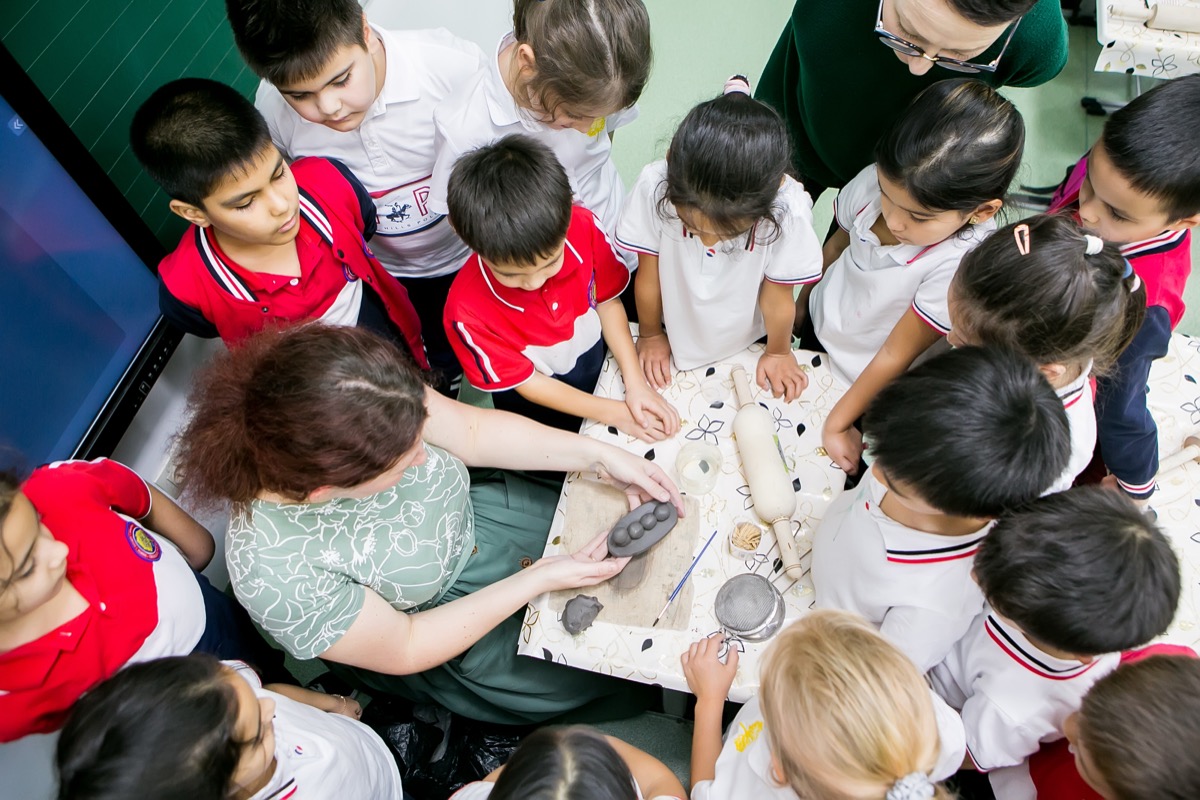
That a child makes the language their own doesn't mean they're left to cope alone. Entering the language is a managed process: the child's level is watched, and support is given right inside the school day — like all the other help at a school where no second budget is needed. So there's no need to spend a year with a tutor beforehand, "so as not to embarrass ourselves": a child settles into the environment by living in it, not by preparing for it in advance.
"They won't take us"
Now for the second fear. An admissions meeting is not an exam and not a selection. We get to know the child in order to understand their strengths — that's how it works here, and it's the honest answer to the question parents are afraid to ask. A six-year-old can't have "insufficient English", because English at that age isn't an entry ticket but a result of studying. To demand it at the door is like demanding the result before the work begins.
A school that filters out small children by language is cutting corners on its main job. That, by the way, is one more question for your list for a meeting with any school: "what happens if a child arrives without English" — and listen for whether they answer you about the child or about the requirements.
How it ends
It ends like this: ten years on, the very child you worry about today writes a personal statement in English — to Toronto, Amsterdam or Hong Kong — and admissions committees read it without translation. The language that feels like a wall today becomes a door. Our graduates are the proof, in a table.

So come and get acquainted — get acquainted, that's all. Bring your child just as they are. Everything they need to be able to do by the first meeting is to be themselves.