Starting kindergarten at two: how to settle in calmly
How long settling in at kindergarten takes at age two, why children cry and what helps. Research and experience from Oxbridge kindergarten in Tashkent.
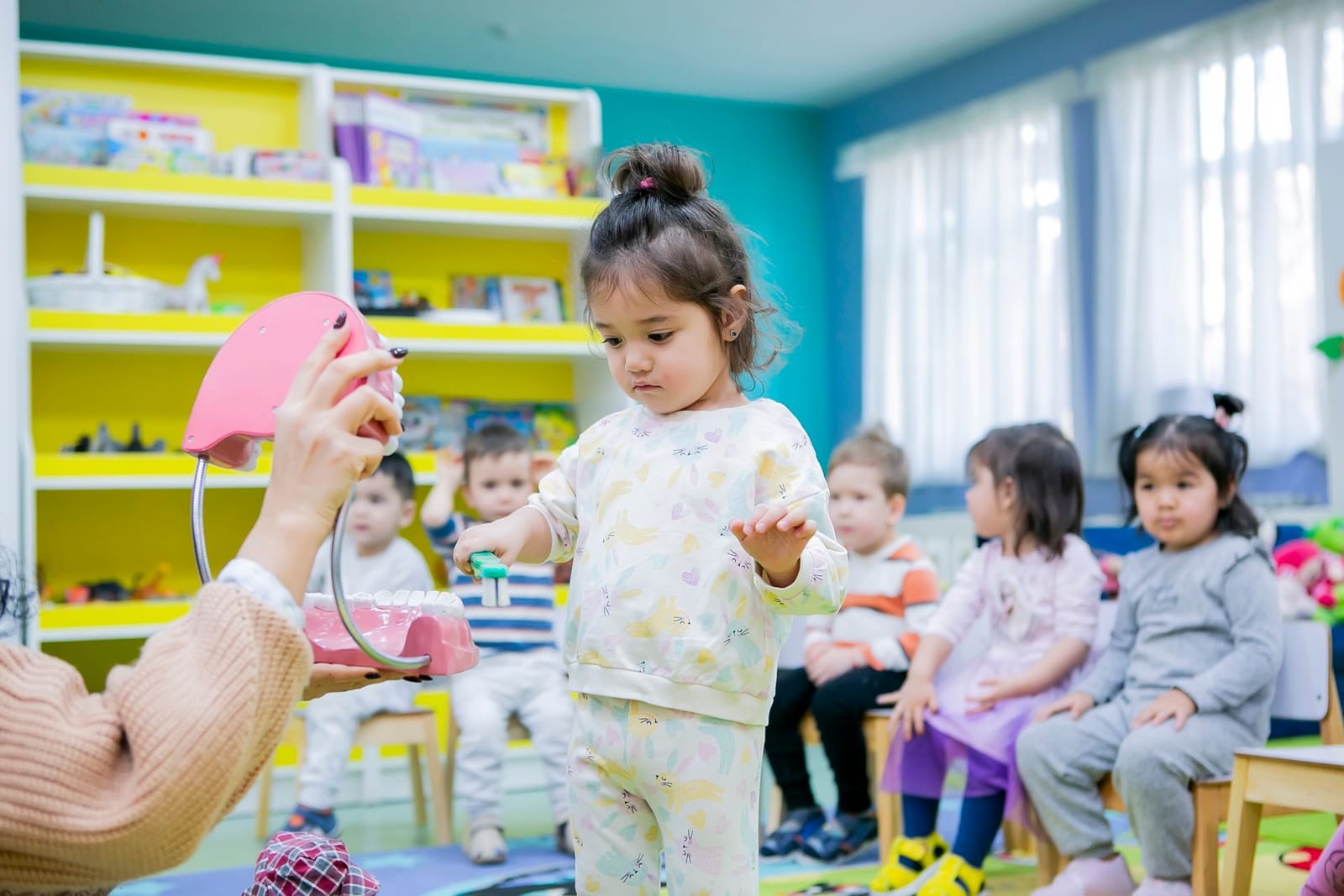
The first day at kindergarten is an exciting time for children and parents alike. In the morning your child holds your hand a little tighter than usual, and you wonder how they will manage without you. Almost every family sending a child to kindergarten for the first time knows these feelings.
In this article we have brought together research findings and our teachers' experience: how long settling in usually takes, what signs show that your child is coping, and how you can help. When you know what to expect, this period goes more calmly for both you and your child.
Why the first weeks are not easy
For a two-year-old, kindergarten means a lot of new things at once: unfamiliar adults, other children, a different daily routine. Even a curious, sociable child feels tired and anxious at first. This is a natural response to a big change, and it says nothing bad about either the child or the parents.
Objective measures show this too. Researchers in Germany measured the level of cortisol, the stress hormone, in children during their first weeks at nursery. Once daily separations from their mothers began, it rose in every child; the children were about 15 months old. The study also reached a reassuring conclusion: when the mother spent more time with her child at the nursery at the start, the child's attachment to her was more likely to stay strong and secure (Ahnert et al., 2004).
So tears at goodbye are not a cause for worry in themselves. Much more telling is how quickly your child calms down after you leave and how they are doing at home.
How long settling in takes
There is no exact timeframe: every child settles at their own pace. Even so, research offers rough guidelines.
In Norway in 2023, researchers followed 113 children who started kindergarten at just over a year old. The hardest time turned out to be the first weeks without parents. By around the third week things became noticeably easier. (Drugli et al., 2023).
Russian child psychologists describe settling in in a similar way. When it goes smoothly, a child's behaviour evens out in about two weeks. If it goes more slowly, sleep and appetite return to normal in 20–40 days, and mood stays changeable for about a month. Sometimes settling in stretches over several months, and then the child and the family should turn to a psychologist for support (Panasyuk and Ivanova, 2016, citing S. V. Glebova).
In the studies from abroad, the children were just over a year old. At two, many children already understand speech better, can say that they feel sad and find it easier to remember that mum always comes back. So at this age settling in often goes a little more easily, though here too every child is different.
The easiest way to judge how settling in is going is to look at how your child sleeps and eats at home. If sleep and appetite are back to normal, your child is coping, even if saying goodbye in the morning is still sad.
Why there is no need to hurry
Many kindergartens in Germany organise settling in around what is known as the Berlin model, developed by specialists in Berlin on the basis of what is known about how young children form attachments to adults. For the first three days, mum or dad stays in the group with the child and does not leave. On the fourth day the parent says goodbye for the first time and leaves for a short while. After that, the time without the parent grows little by little, and each next step is taken only when the child is ready for it.
In this model the sign that settling in is complete is very clear: the child lets the teacher comfort them. It means there is now one more adult nearby whom they trust.
How it works at Oxbridge kindergarten
We do not rush the child either, and we go through this period together with the family:
- At first your child stays in the group for an hour or two. You are close by during this time: there is a café on the campus where you can wait.
- Then for half a day. All this time the same teacher is with your child, so they have someone to get used to.
- Many children walk into the group on their own within a couple of weeks. Some need more time, and that is normal.
Our approach rests on a simple idea: a child can only learn when they feel safe. That is why helping them feel safe is our first task, especially in the first weeks.
What else helps during this period:
- A small group. There are no more than 20 children in a group, with two adults all day: a teacher and an assistant.
- A psychologist on hand. Each campus has a school psychologist who is involved in the life of the group and sees how your child is settling in.
- You are always kept informed. You receive feedback every day and know how the day went before you arrive to collect your child. There is a written report once a month and meetings with teachers several times a year.
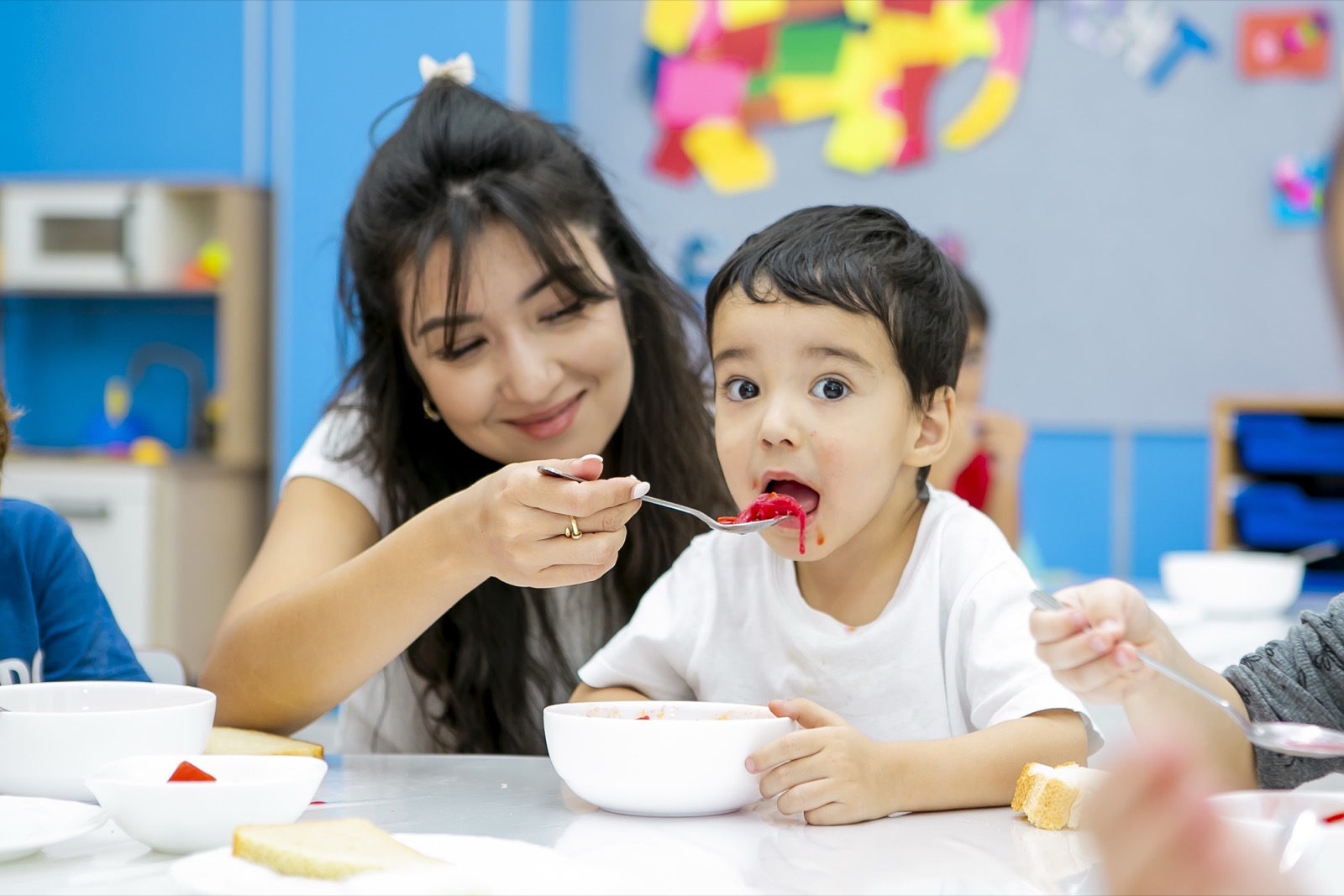
- Familiar food. Meals are cooked in each campus's own kitchen, five times a day. If your child has an allergy, the menu is adapted for them.
- A calm, secure site. The grounds are closed, entry is only through security, and there are cameras in the groups and in the playground.
And one more thing parents often think about in advance. Our kindergarten is part of the school, and after kindergarten children go into Year 1 at Oxbridge right here, in a building they know. So when school starts, your child comes to a place that is already familiar, and settling in again is easier.
You can read more about our groups, programmes and fees on the Oxbridge kindergarten page.
How to help your child
A few simple things help almost every child.
Always say goodbye to your child, even if slipping away unnoticed seems easier. A short, calm goodbye with a clear promise ("I'll come after lunch") works better than long persuasion. If mum leaves without saying goodbye, it is harder for the child to understand that she will definitely come back.
Come back when you said you would. This way your child learns, step by step, that every parting is followed by a reunion.
If possible, do not change anything else during these weeks: do not wean them off the dummy, move them to a new bed or plan a house move. One big change is enough for your child for now.
Give your child something from home: a favourite toy, a book, mum's scarf. With something familiar, the first hours at kindergarten go more calmly.
If you can, keep the first month free. Often things settle down sooner, but this way you will have time in reserve if your child needs longer.
Do not put off your questions to the teachers. If things are not getting easier after three weeks, talk to the teacher and the psychologist: together it is easier to understand what will help your particular child.
Frequently asked questions
How long does it take a two-year-old to settle in at kindergarten?
Most often from two weeks to a month and a half, sometimes longer. Many children settle in within a couple of weeks; some need more time, and that is normal.
My child cries every morning. Is something going wrong?
Most likely not. Crying at goodbye is normal in the first weeks. What matters more is how quickly your child calms down after you leave and how they sleep and eat at home.
Can I stay nearby in the first days?
Yes, nearby: in the first days you wait in the café on the campus. Research shows that a parent's presence at the start helps a child keep a secure attachment.
We invite you to come on a tour. We will show you the group, the playground and the kitchen, introduce you to the teachers and explain how settling in will work for your child.
Book a tour