My child has joined an English-speaking group and is not talking. Is that normal?
Why a child in an English-speaking group is silent at first, how long the silent period lasts and how to tell that all is well. Based on research.

You have chosen an English-speaking group for your child and are waiting for their first phrases. One week passes, then another. At home your child happily tells you about kindergarten, but in Russian, and when you ask them to say "apple" in English, they say nothing. At moments like this parents often begin to wonder whether their child is coping and whether they started too early.
This behaviour is well studied. Most likely your child is going through an ordinary stage familiar to almost every child who finds themselves in a new language environment.
How children learn a new language at kindergarten
The American researcher Patton Tabors spent many years observing preschool children who joined a group where people spoke a language unfamiliar to them. She described how this path usually unfolds (Tabors, 1997, as summarised by NALDIC):
- Home language first. The child tries speaking their own language, even if no one understands. This stage is usually short.
- Silence. The child goes quiet and seems to be watching. In fact, during this time they are gathering information about the new language, listening closely and sometimes quietly trying out sounds.
- First words and ready-made phrases. Single words appear, along with whole expressions learned as a unit: "my turn", "I don't know", "look".
- Their own speech. The child begins to build their own phrases, simple ones at first and with mistakes.
How long the silence lasts
The timeline differs from child to child. According to different studies, the silence lasts from a few days to more than a year (review by Kan et al., 2025). Researchers still debate exactly how to define this period. But on the main point they agree: silence does not mean the child is doing nothing.
Even during this period children communicate: with gestures, with their eyes, with quiet speech to themselves, with words in their home language. And as a rule they understand far more than they can say. American guidance materials for teachers in Head Start preschool programmes say this too.
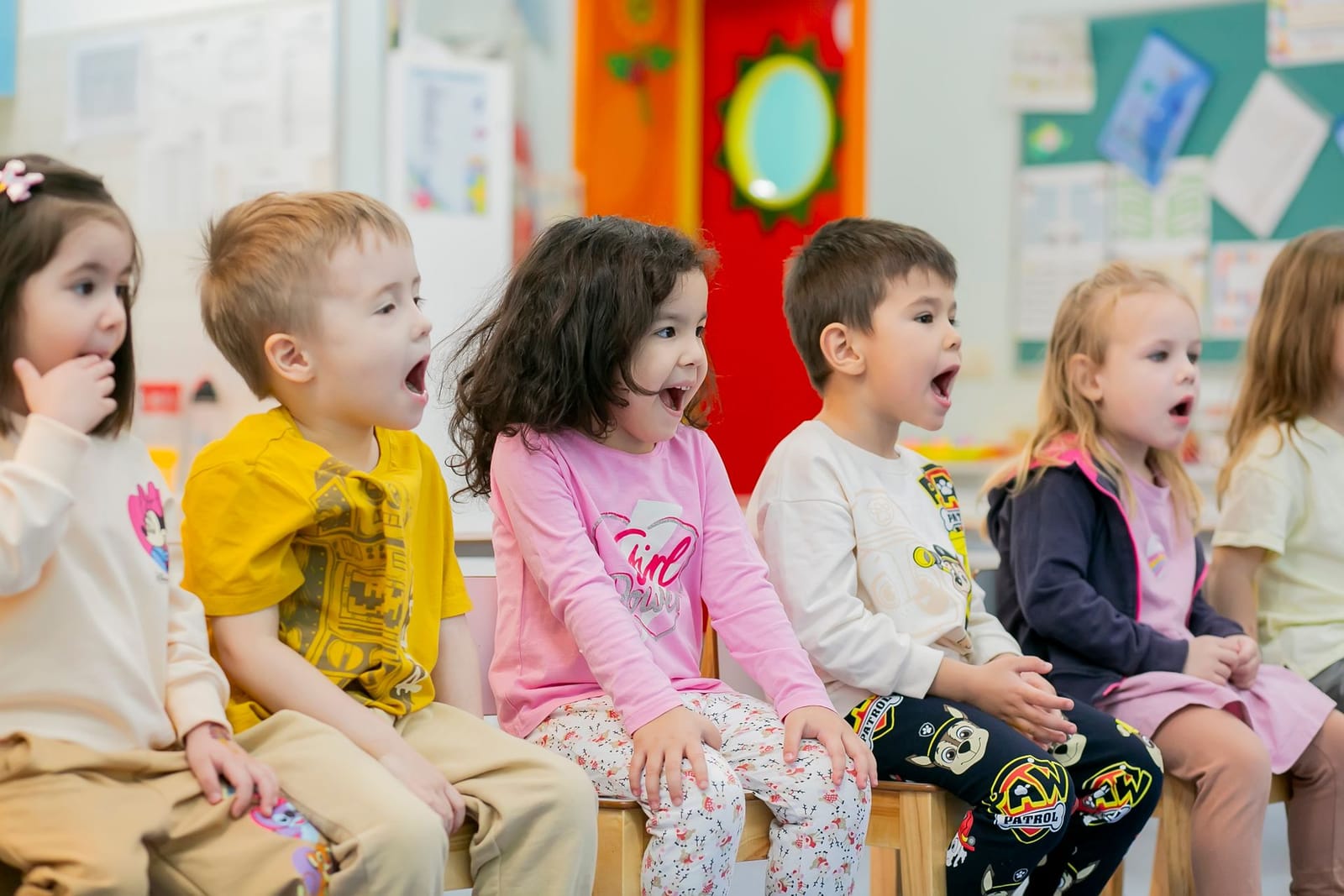
How to tell that all is well
Head Start gives teachers a simple guideline. If a child is silent at kindergarten but talks a lot and willingly in their home language at home, it is most likely an ordinary silent period. A genuine speech delay shows up in both languages in the same way.
So look first at how your child speaks their own language. If their home language is fine, the new language simply needs time.
What will happen to the home language
Many parents worry that English will push out Russian or Uzbek. Others, on the contrary, fear that the home language will get in the way of English.
A major report by the US National Academies of Sciences (2017) answers both concerns. There is no evidence that one language at home and another at kindergarten confuse a child or put the development of either language at risk. On the contrary, a strong home language helps with learning a second one: skills a child has developed in their own language later carry over to the new one.
The real risk lies elsewhere. Preschoolers who hear a lot of a new language sometimes start to prefer it and become reluctant to speak their home language. So it is worth looking after the home language: speak, read and sing in it just as before.
When will my child speak freely?
Researchers do not give an exact timeframe for preschoolers. Data on school-age children who moved to an English-speaking country serve as a guide. They picked up everyday conversational English at the level of their peers in about two years. Catching up with their peers in academic work in that language took from five to ten years (Cummins, 1999).
It follows that language develops over years, and this pace is natural. That is why it matters so much that English continues at school.
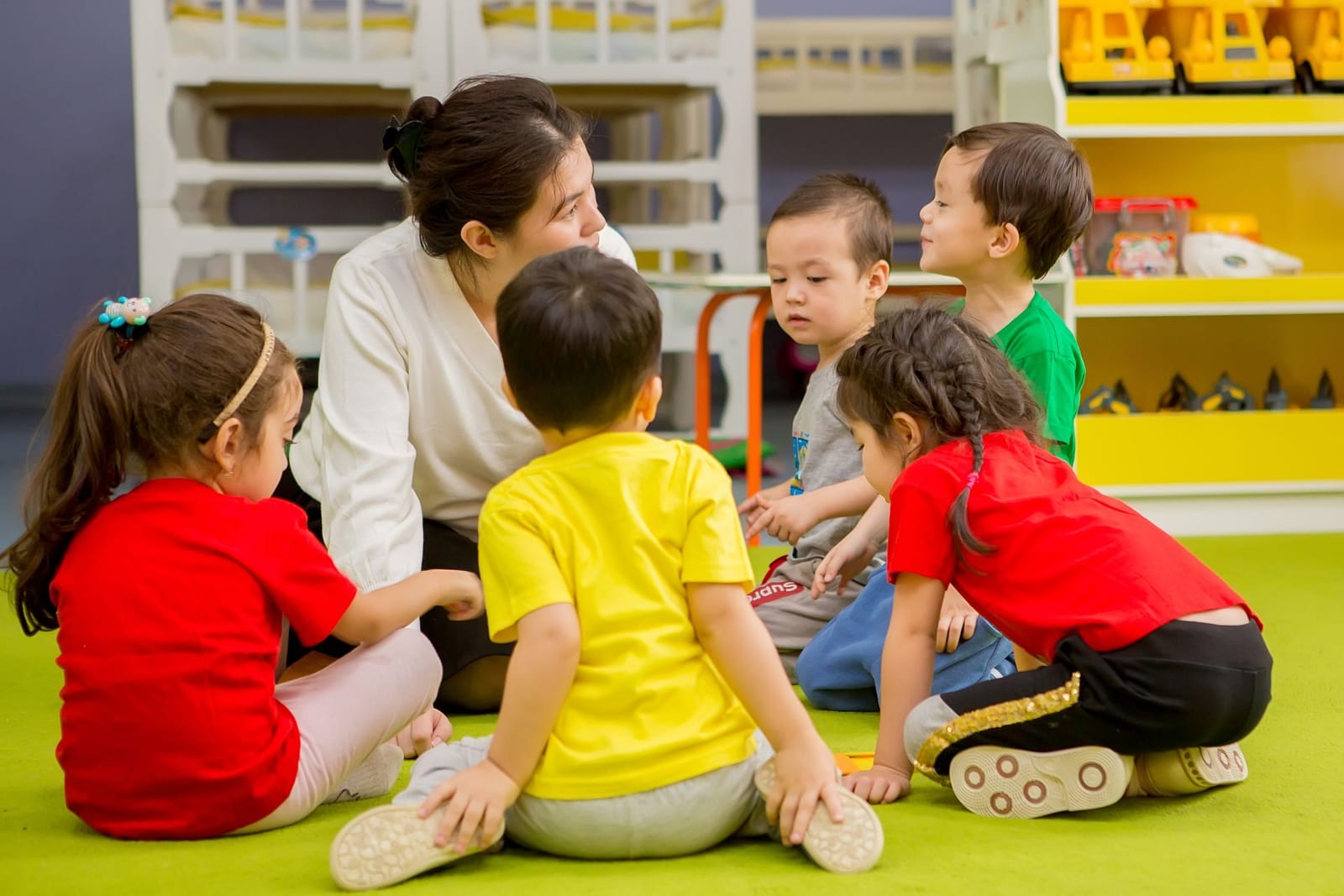
How to help your child at home
- Do not hurry them to answer in English. During the silent period a child needs time. Teachers are advised to accept an answer given by gesture and to keep talking even if the child is silent; you can do the same at home.
- Speak your own language at home. Tell stories, read, talk about the day. A strong home language helps the second one too.
- Ask about kindergarten with real interest. Let your child tell you in whichever language is comfortable for them.
- Celebrate first words, even if it is a single "thank you" at dinner.
- Sing kindergarten songs together if your child brings them home.
- Stay in touch with the teacher. They will tell you what your child already understands and how they are getting on in the group.
How it works at Oxbridge kindergarten
In the IB Preschool programme, for children from the age of five, the whole day is fully in English. Children learn through inquiry, following the same IB programme as in Oxbridge primary school.
With us, English is not a separate lesson but part of the day: songs, stories, real conversation with an expat teacher. This is close to what researchers advise teachers to do: plenty of real conversation, talking to a child even while they are still silent, and readiness to accept answers given without words.
If you are not ready for a fully English-speaking group yet, there are the Early Development (ages 2–4) and Active Development (ages 4–7) groups, where Russian and English are heard together, in one flow.
To help the first weeks go calmly for you too:
- Feedback every day. You know how the day went before you collect your child.
- A written report once a month and several meetings with teachers a year.
- A school psychologist on each campus, who is part of group life.
- Gentle settling in with an individual approach to every new child.
English does not stop after kindergarten: your child can continue learning in the IB programme at Oxbridge primary school.
You can read more about our groups, programmes and fees on the Oxbridge kindergarten page.
Frequently asked questions
How long does the silent period last?
It varies: from a few days to a year or longer, depending on the child. What matters is that during this time they are listening, understanding and communicating in their own way.
How can I tell a silent period from a speech delay?
Look at how your child speaks their home language. If they talk freely at home and are silent only in an English-speaking setting, it is most likely an ordinary stage. A genuine speech delay is visible in both languages. If you have doubts, discuss them with the teacher and a specialist.
Should we switch to English at home?
No. Research shows that a strong home language helps with learning a second one. At home it is best to speak the language that feels easy and natural to you.
We invite you to come on a tour: we will show you how a day goes in the IB Preschool group and introduce you to the teachers.
Book a tour