How to feed a child aged 2–7: routine, new foods and sugar
How often a child aged 2–7 should eat, why they refuse new foods and how much sugar is OK. WHO and paediatric advice, and meals at Oxbridge kindergarten.
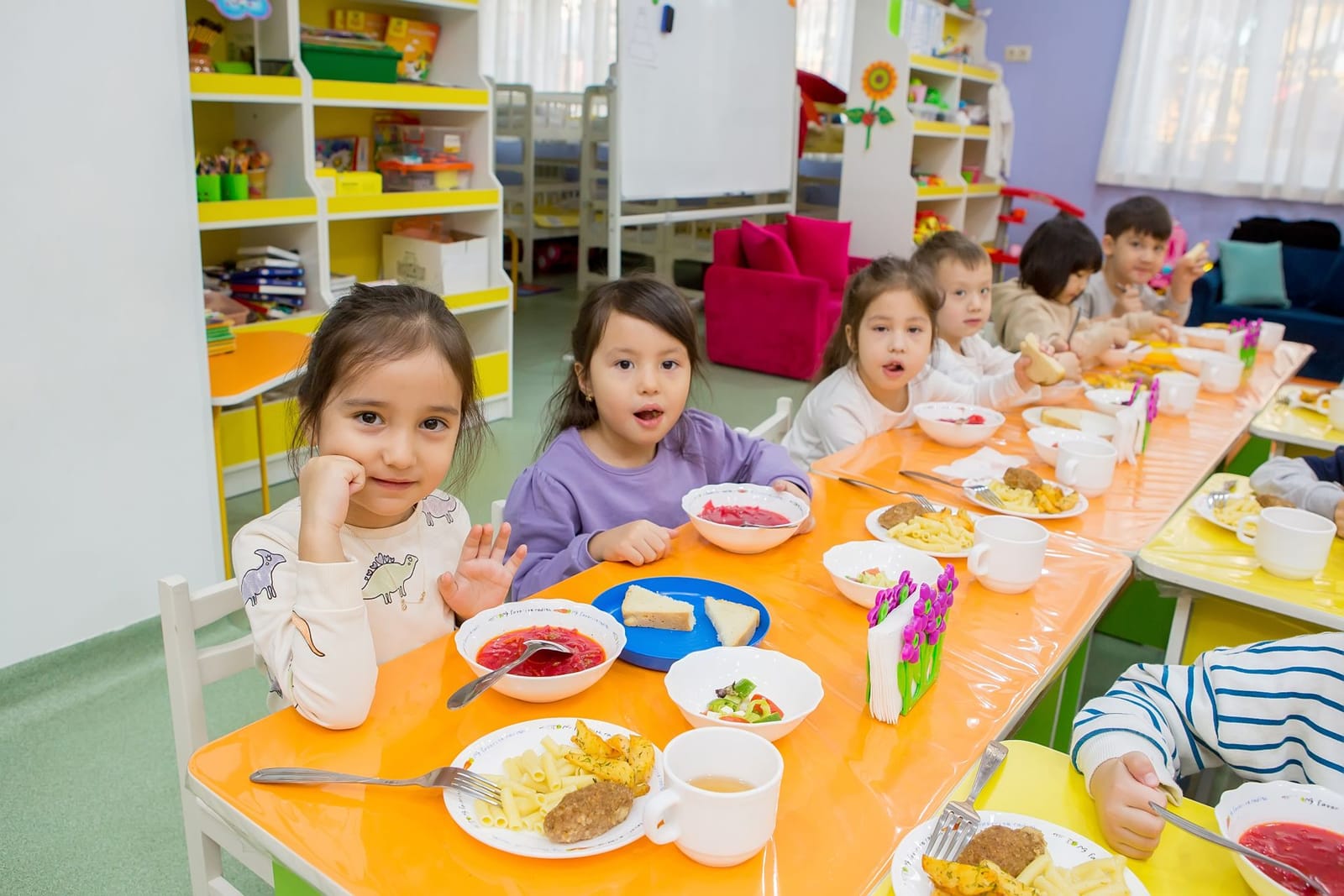
When parents choose a kindergarten, food is among the first things on their minds: will their child have enough to eat, will they try things they have never eaten at home, and how many sweet things are on the menu. These are understandable questions: a child spends most of the day at kindergarten and eats most of their daily food there.
Below are the recommendations of paediatricians and the World Health Organization on feeding children of this age, along with an explanation of how meals work at our kindergarten.
Why young children need to eat more often
A young child usually eats only a little at a time, and it is not enough to last until the next meal. That is why paediatricians recommend three main meals and two snacks a day for children of this age, at roughly the same times. With a steady routine, a child has time to get hungry before a meal without becoming ravenous, and eats more calmly.
Portions are also smaller than adults usually imagine. A useful guide is about one tablespoon for each year of age, for example of vegetables.

Why children refuse new foods
Many children between roughly two and six years old are wary of unfamiliar food. Researchers call this food neophobia and consider it an ordinary stage of development, and this caution usually eases with age.
A liking for a new taste can be built gradually. The American Academy of Pediatrics writes that a child may need to try a new food 10–15 times over several months before they will eat it. British researchers tested this in practice: children who were offered an unfamiliar vegetable to taste several times in a row gradually began to eat it more willingly (Wardle et al., 2003).
What helps:
- Offer new food a little at a time, a spoonful rather than a whole plate.
- Put something unfamiliar next to something your child already likes.
- Let your child touch, smell or lick it. That is also a way of getting to know food.
- Do not give up after two or three refusals: getting used to a food usually takes more tries.
Who decides how much to eat
The American dietitian Ellyn Satter proposed a simple principle known as the division of responsibility in feeding. The adult decides what, when and where the child eats, and the child decides whether to eat and how much.
In practice this means not making a child finish their plate and not coaxing them with "just one more spoonful for mummy". The American Academy of Pediatrics advises against forcing children to eat and recommends keeping mealtimes calm. Nor is it worth rewarding a finished bowl of soup with something sweet: a child soon learns that soup is something to put up with, and the real reward is dessert.
How much sugar is acceptable
The World Health Organization advises children and adults to get less than 10% of their daily calories from free sugars, and ideally less than 5%. Free sugars are the sugars added to food and drinks, as well as the sugar in honey, syrups and juices. The sugar in fresh fruit, vegetables and milk does not count.
The American Heart Association gives a more tangible guide: no more than 25 grams of added sugar a day for children aged 2 to 18, which is about six teaspoons. For comparison, according to the WHO, a single can of sugary fizzy drink can contain up to 40 grams of sugar.
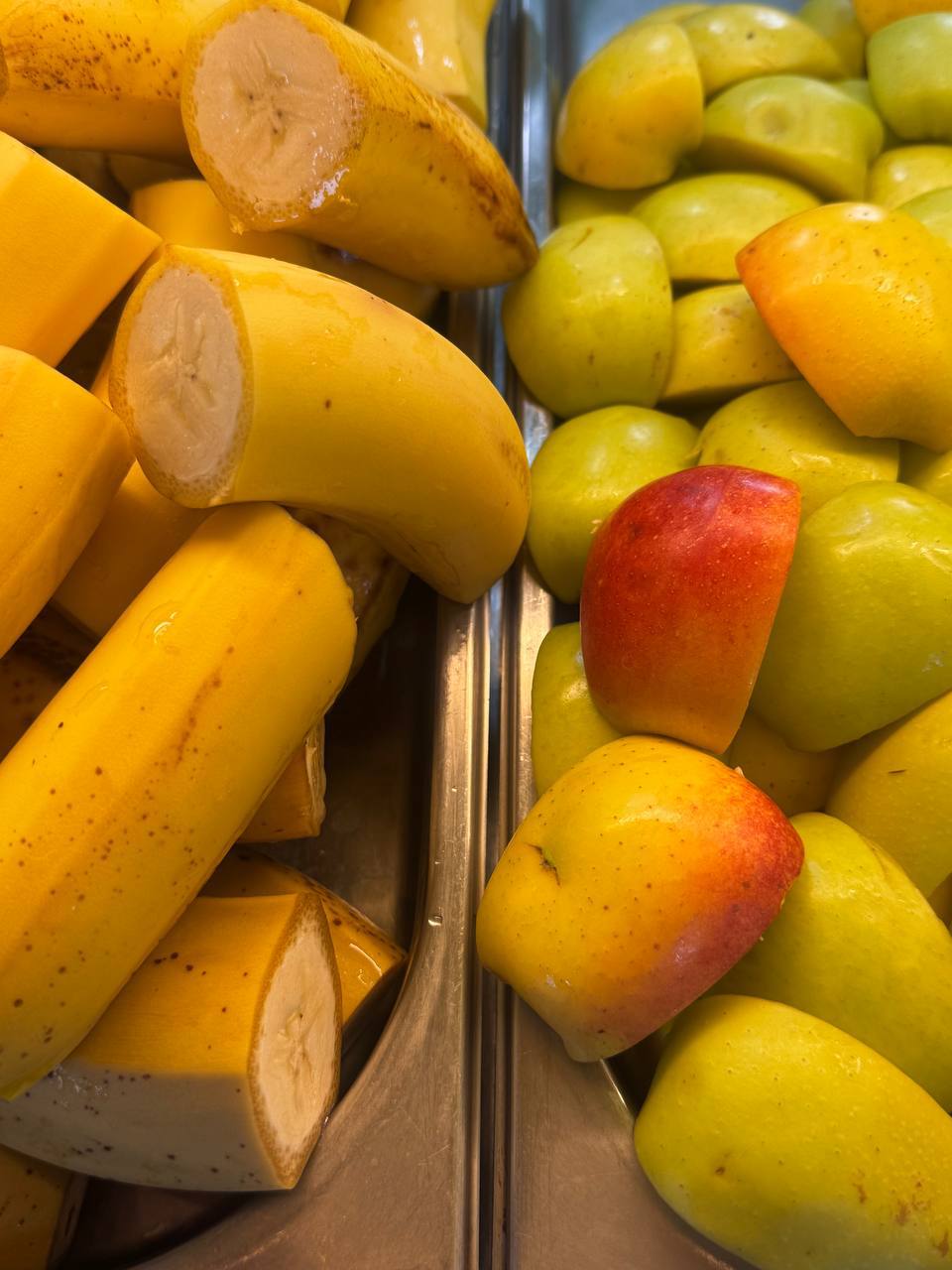
The best drinks for children are water and milk. Even natural juice harms teeth and adds extra calories, so paediatricians recommend limiting it to one small glass a day, up to 120 ml at ages 2–3, 120–180 ml at ages 4–6 and up to 240 ml from age 7. Whole fruit is preferable to juice: it contains fibre, and it cannot be eaten quickly.
A similar approach applies to salt: the WHO advises adults to have less than 5 grams a day, and children even less, depending on how many calories they need.
How children are fed at Oxbridge kindergarten
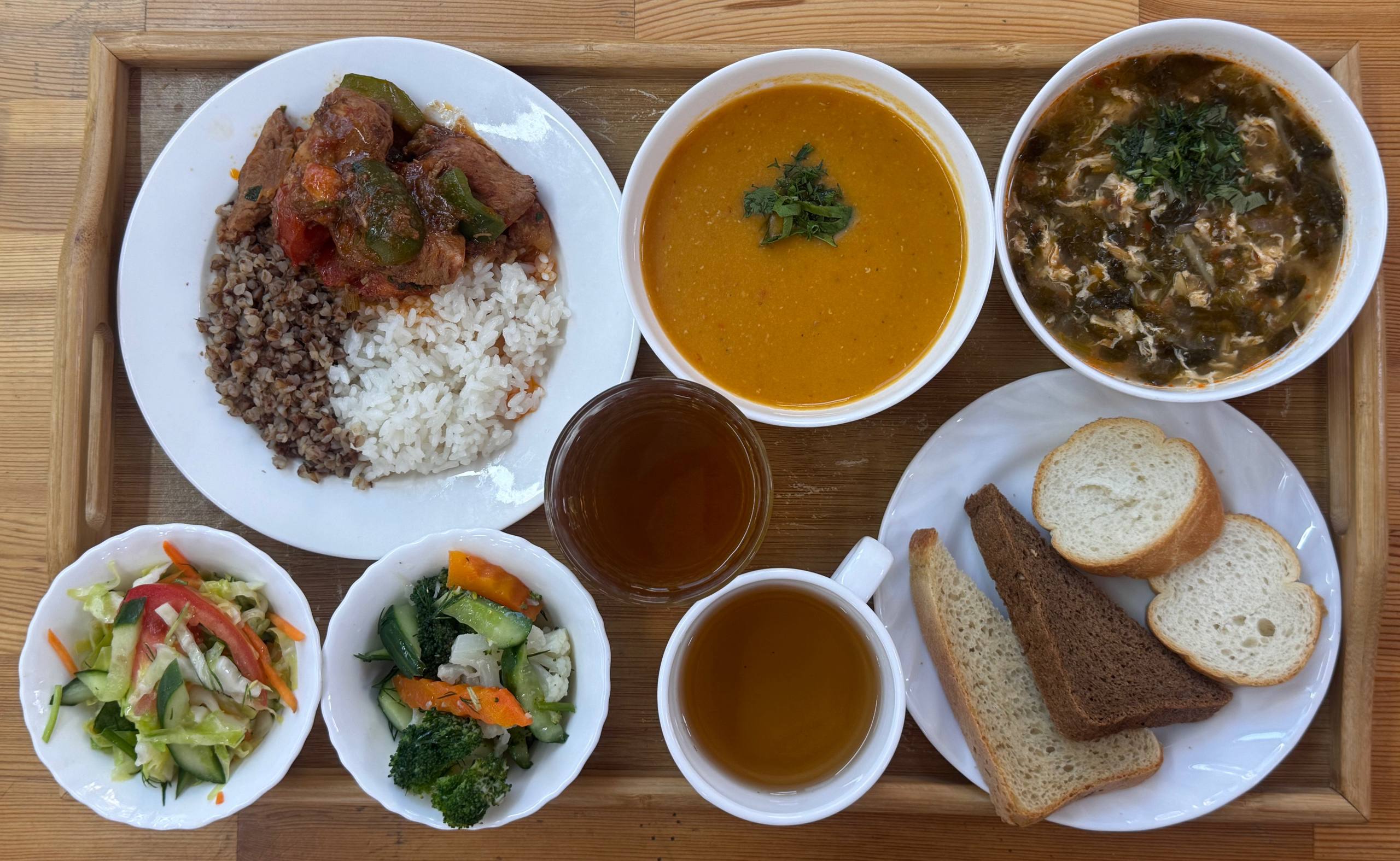
Each campus has its own kitchen: food is cooked on site rather than brought in. Children are fed five times a day, and meals are included in the fees.
Here, for example, is one day from the kindergarten menu:
- Breakfast: corn porridge made with milk, a boiled egg, bread with cheese and butter, tea with lemon.
- Mid-morning snack: a pear and an apple.
- Lunch: pea soup and broccoli soup, chicken thighs in a sour cream sauce, a choice of rice or buckwheat as a side, Chinese cabbage salad, fresh vegetables, bread, fruit compote.
- Afternoon snack: wafers, unsweetened tea.
- Dinner: soup with dumplings, kefir, unsweetened tea.
That same week there was fruit for the mid-morning snack every day, and salad or fresh vegetables were served with lunch every day. If your child has an allergy, the menu is adapted for them.
In addition, you receive feedback from the teacher every day on how your child's day went.
You can read more about our groups, programmes and fees on the Oxbridge kindergarten page.
What you can do
Sit down at the table with your child when you can, and eat the same food as they do. Eating together is a good, relaxed opportunity to try something new.
Keep a simple routine at home, similar to the one at kindergarten: breakfast, lunch, dinner and two snacks at roughly the same times. A consistent rhythm helps your child both at kindergarten and at home.
Offer water instead of juice and sugary drinks, and serve sweet things as an ordinary part of a meal, without bargaining or rewards.
If your child has started eating less at kindergarten, discuss it with the teacher. Together it is easier to work out the reason: unfamiliar dishes, tiredness, or your child still getting used to the group.
Frequently asked questions
My child hardly eats in the first weeks at kindergarten. Is that normal?
Yes, appetite often drops during the settling-in period and then recovers. If things are no better after a few weeks, talk to the teacher and the psychologist.
What if my child has an allergy?
Let us know when your child joins. At Oxbridge kindergarten the menu is adapted for a child with an allergy.
How much sugar can a child have a day?
The WHO advises that free sugars should make up less than 10% of calories, and ideally less than 5%. The American Heart Association recommends no more than 25 grams of added sugar a day for children from the age of 2, which is about six teaspoons.
We invite you to come on a tour: we will show you the kitchen and a group, tell you about the menu and answer your questions about your child's meals.
Book a tour