Reading begins before letters: how to prepare a child aged 4–5
Which skills at 4–5 help a child learn to read easily later, why sound games matter and how to read together with your child. Based on research.
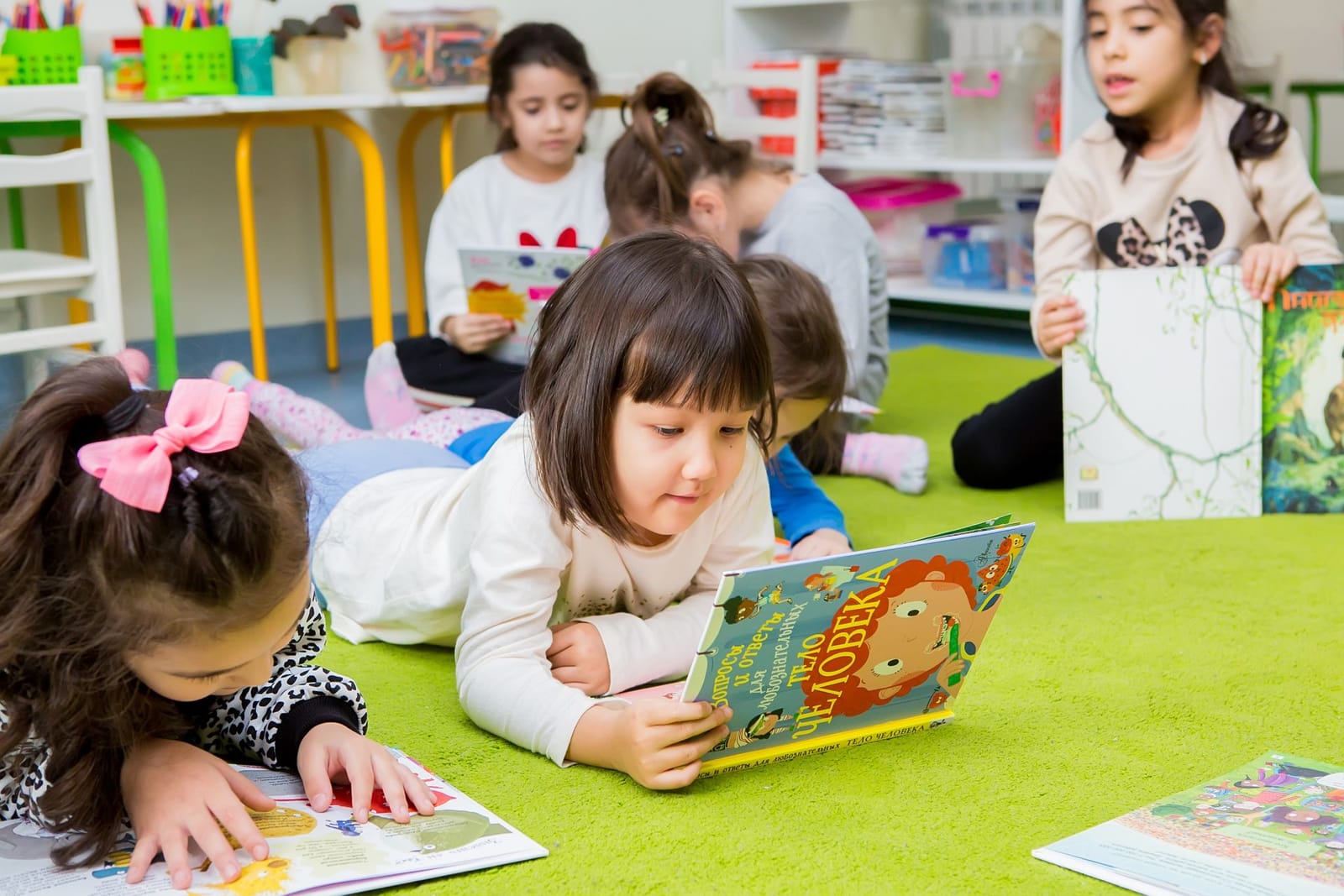
At four or five, many parents start thinking about reading. Some children of the same age are already reading syllable by syllable, friends recommend letter blocks and handwriting workbooks, and your child still mixes up letters like "b" and "d". You may wonder whether it is time to sit down with a primer.
The answer depends on what counts as preparing to read. It begins long before letters, with how a child hears and speaks. Below we look at which skills matter for this and how to develop them at home.
What helps a child learn to read
In the United States, a group of researchers, the National Early Literacy Panel, analysed a large number of studies on which preschool skills help a child read and write well later. They identified six skills that are linked to success in reading even after taking into account a child's intelligence and the family's social and economic situation (National Early Literacy Panel, 2008):
- Knowing letters. The child recognises letters and knows their names and sounds.
- Hearing the sounds in words. Splitting a word into syllables, hearing rhymes, hearing the first sound in a word.
- Quickly naming letters and numbers when they see them.
- Quickly naming familiar objects and colours.
- Writing letters or their own name.
- Holding sounds in memory, as well as short sequences of words.
Letters are on this list, and learning them is useful. But alongside them are skills that have nothing to do with letters: hearing and telling apart the sounds of spoken language.
Another of the researchers' conclusions concerns spoken language itself: its development also plays a big role. And it is not only vocabulary that matters, but also how a child builds sentences and understands what they hear.
Sound analysis in Russian schools
In Russian schools, learning to read is traditionally preceded by a period of sound analysis: which sounds a word is made of, where the stress falls, which consonants are hard and which are soft (Silchenkova, 2006). The psychologist Daniil Elkonin wrote that recreating a spoken word from its letters is harder for a child than it seems to an adult.
How to read together so that it helps
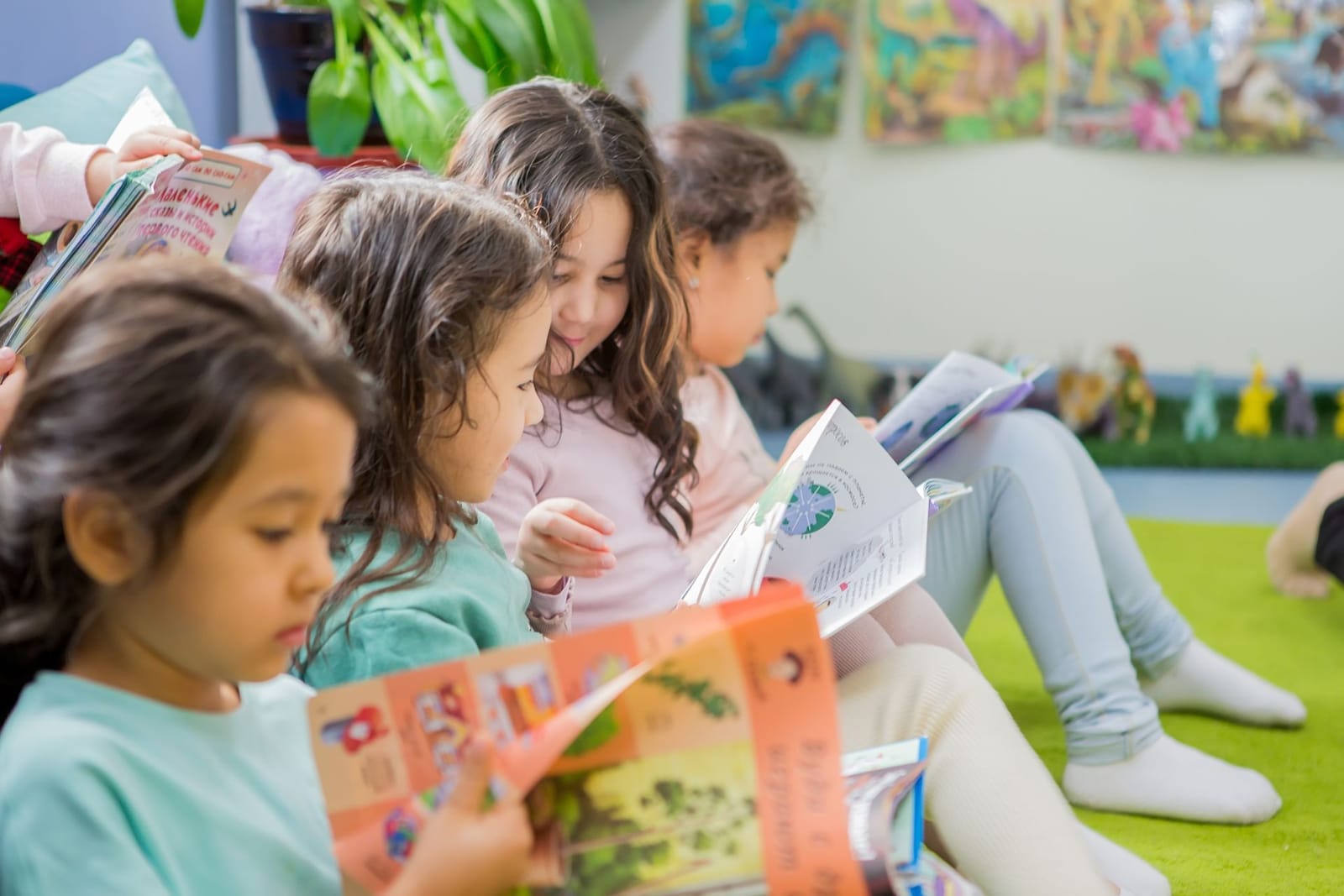
According to the same National Early Literacy Panel, shared book reading develops a child's spoken language and their knowledge of print. In 2024 the American Academy of Pediatrics again recommended that parents read with their children from birth and at least until they start school (AAP, 2024). The Academy advises reading every day, in a fun and lively way, as well as rhyming, playing, talking and singing together.
Reading does the most good when the child does more than listen. Researchers describe a method they call dialogic reading: the adult asks questions, gradually the child becomes the storyteller, and the adult listens and helps. This kind of reading develops language well (What Works Clearinghouse, 2007).
Here is what it looks like in practice:
- pause on a picture and ask: "What's happening here?";
- ask what will happen next, and let your child make it up;
- repeat their answer a little more fully: "Yes, the cat climbed the tree because it was scared of the dog";
- after the book, ask your child to retell the story in their own words.
This method has a limitation: according to the same research, shared reading on its own does very little to teach children to hear the sounds in words. That takes separate games, which are covered in the next section.
Paediatricians give two more pieces of advice. A paper book is better than an electronic one: with an e-book, parents and children talk to each other less. And in a family that speaks several languages, you can read in any of them: paediatricians support books in whichever languages suit the family.
Sound games you can play on the way to kindergarten
These games do not need workbooks or set time at the table:
- Rhymes. "Cat, hat... what else?" You can also make up funny words that do not exist.
- Clapping. Clap out a word syllable by syllable: "ba-na-na".
- First sound. "I spy with my little eye something beginning with the sound S."
- The lost word. You say a word with a mistake in it, and your child corrects you.
- Their own name. Look for the letters of their name on shop signs, then try writing it themselves.
- Retelling. Ask your child to tell you what happened at kindergarten in order: first, then, at the end.
Games like these are easy to fit into an ordinary day: you can play on the way somewhere, in a queue or over dinner.
How it works at Oxbridge kindergarten
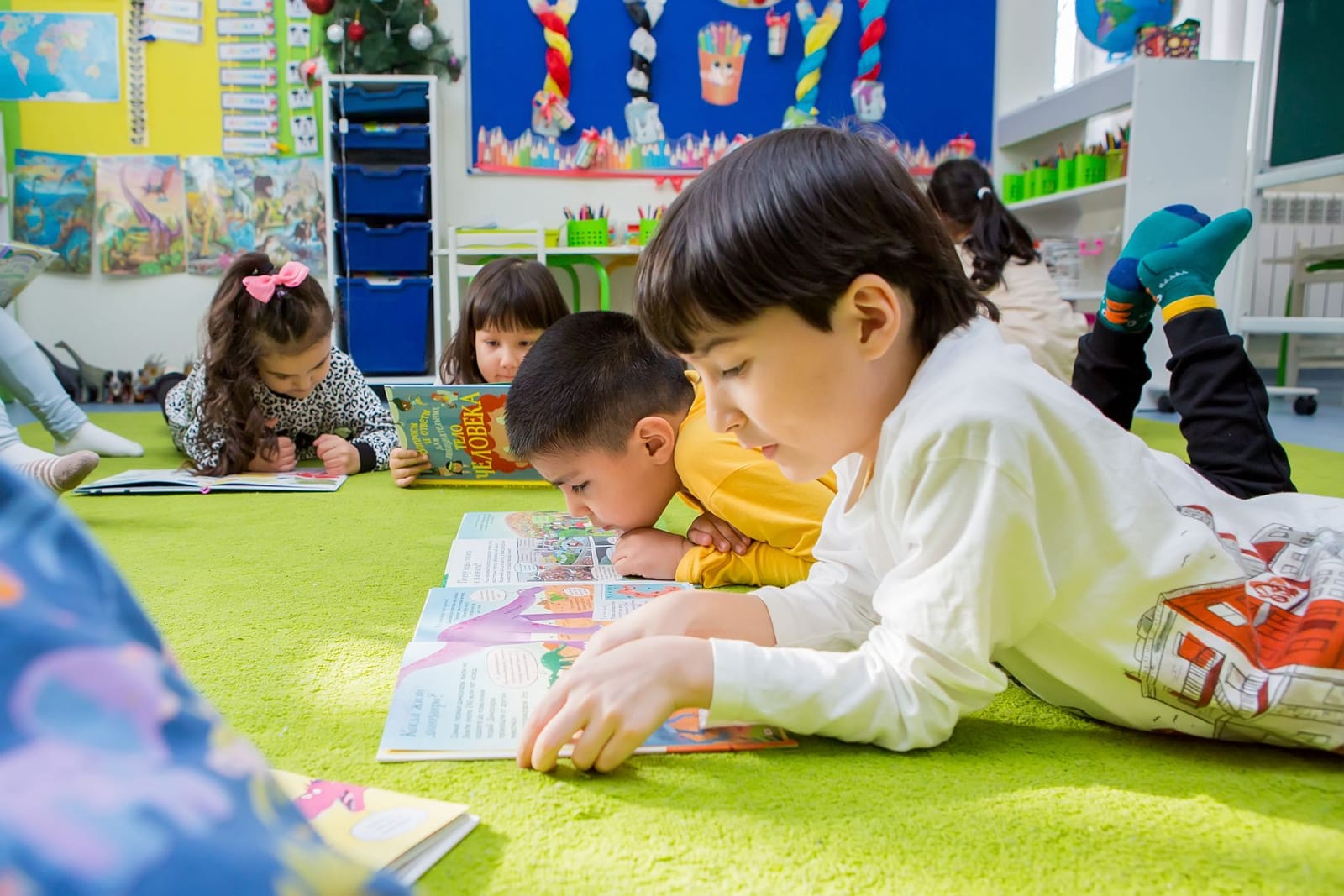
The Active Development group is for children aged four to seven. At this age play becomes thinking, and this is where preparation for school begins.
The group's approach echoes the research findings:
- Emergent literacy and early reading. With us, retelling comes before writing: first a child learns to understand a story and tell it in their own words.
- Maths through hands-on materials. Children count using objects they can touch and move around.
- Two languages every day. Russian and English flow together: in conversation, in books and in everyday communication.
For families who choose the international pathway, there is the IB Preschool programme from the age of five. The whole day is in English, and children learn through inquiry, following the same IB programme as in Oxbridge primary school.
Parents can always see how their child is progressing: feedback every day, a written report once a month and several meetings with teachers a year.
After kindergarten your child moves into Year 1 at Oxbridge, right here, in a building they know. Preparation for reading and school follow on from one another, so getting used to school is easier.
You can read more about our groups, programmes and fees on the Oxbridge kindergarten page.
Frequently asked questions
At what age should I teach my child letters?
Knowing letters really does help with reading later, and at 4–5 they can be learned through play. Just as important are hearing the sounds in words and well-developed speech, and these are built through rhymes, syllable games and retelling.
The neighbours' child is already reading and mine is not. Is that bad?
There is no need to worry in advance. What matters for future reading are the skills we described above: knowing letters, hearing the sounds in words, well-developed speech and understanding stories. You can develop them calmly at home through play.
How should I read to my child so that it helps?
Read every day, ask questions about the pictures, let your child do the telling and ask them to retell the story. A paper book works better for this than an electronic one.
We invite you to come on a tour: we will show you the Active Development group and explain how we prepare children for school.
Book a tour